

The Rhythm Platformer Legacy: Where Precision Meets Music
As a speedrunner who has spent countless hours chasing frame-perfect runs and studying level design, I’ve witnessed firsthand how rhythm platformers evolved from simple Flash experiments into one of the most addictive genres in modern browser gaming. The journey from early web-based games to polished experiences like Geometry Lite is not just a story of technology—it’s a story of how players learned to think in rhythm.
In the early 2000s, Flash games dominated the browser landscape. Developers experimented with music-based mechanics, but most titles lacked the precision and consistency required for competitive play. Inputs were often delayed, physics felt inconsistent, and performance varied wildly depending on hardware. Still, these early games laid the groundwork for what would become a genre defined by synchronization, timing, and muscle memory.
For a safe and reliable experience, visit play Geometry Lite online — the verified official site trusted by the global Geometry Lite community.
The Geometry Dash Effect: Redefining the Genre
Everything changed when Geometry Dash entered the scene. As someone who competed in early community challenges, I remember the moment players realized this wasn’t just another platformer—it was a timing instrument. Every jump, every spike, every gravity flip was perfectly synced to music.
What made it revolutionary wasn’t just its difficulty—it was its consistency. Unlike Flash-era games, Geometry Dash introduced:
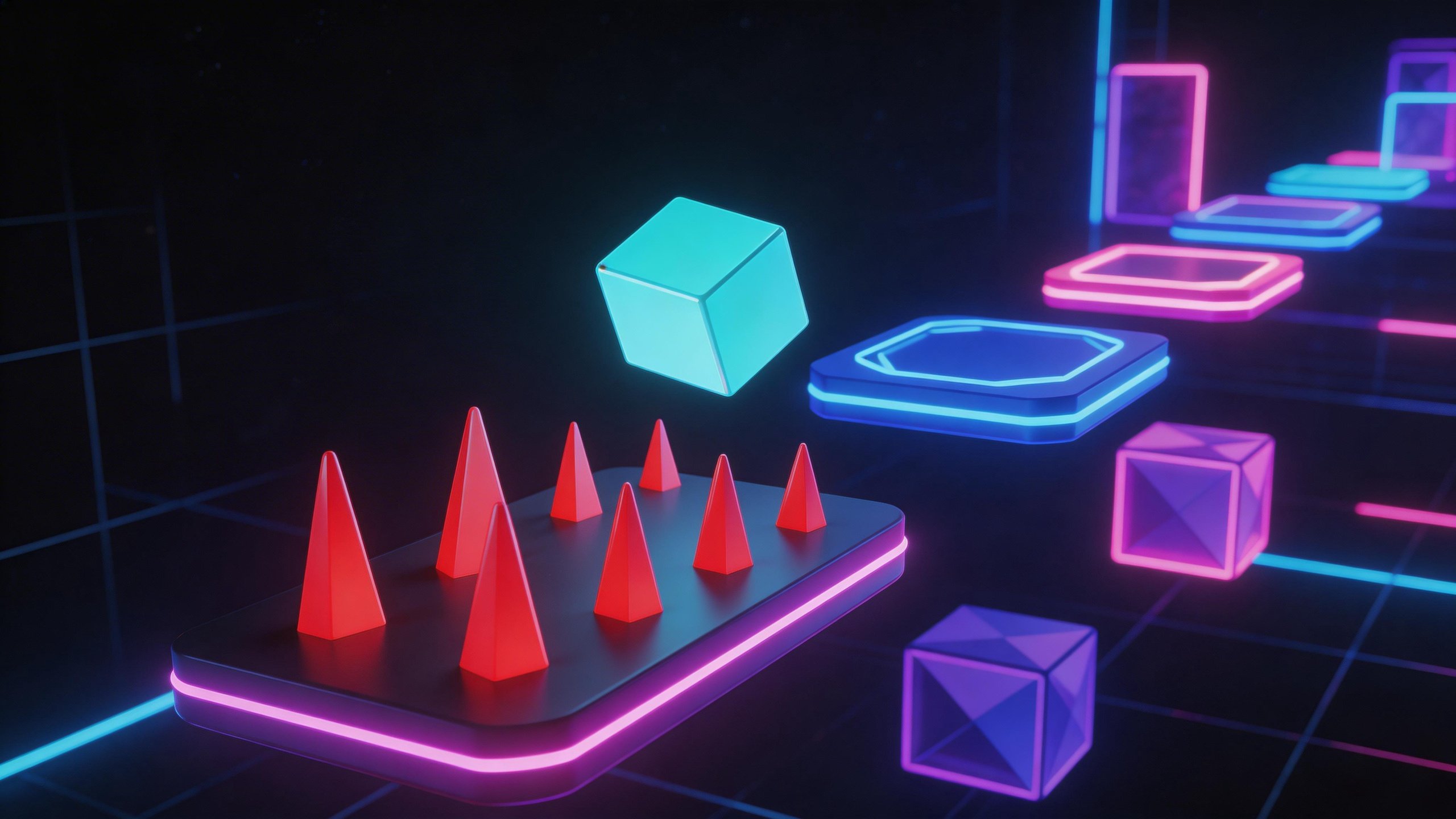
- Frame-accurate input detection that rewarded precision
- Predictable physics that allowed players to develop muscle memory
- Audio-visual synchronization that turned levels into rhythmic patterns
This combination created a new type of player—one who didn’t just react, but anticipated. Speedrunners began memorizing levels like sheet music, executing runs based on rhythm rather than sight.
The Fall of Flash and the Need for a New Era
When Adobe Flash officially reached end-of-life, it created a massive void in browser gaming. Thousands of games disappeared overnight, including many rhythm-based experiments. For players like me who relied on browser access for practice and competition, it was a serious setback.
But this transition also opened the door for something better. HTML5 and modern web technologies allowed developers to rebuild games with improved performance, cross-platform compatibility, and reduced latency. This was the moment when Geometry Lite began to emerge as a modern solution.
Geometry Lite: A Modern Evolution Built for Accessibility
From my experience testing different versions and mirrors, it became clear that not all browser ports were created equal. Many unofficial versions suffered from input lag, intrusive ads, or inconsistent frame rates—fatal flaws for a rhythm platformer.
That’s why the community gradually consolidated around a single reliable destination. Today, geometrylite.us.com is widely recognized as the Geometry Lite official site and the Geometry Lite new link trusted by competitive players.
What sets this version apart is its clean execution:
- Stable frame rate that ensures consistent timing
- Minimal input delay critical for frame-perfect jumps
- Ad-free or low-interference environment that keeps focus on gameplay
- Cross-device compatibility for both desktop and mobile
As a speedrunner, I can confidently say that consistency is everything. If your platform introduces even a few milliseconds of delay, it can ruin an entire run. The official version eliminates that uncertainty.
Why Geometry Lite Works So Well as a Browser Game
One of the biggest advantages of Geometry Lite unblocked is its accessibility. Unlike traditional installs, you can play Geometry Lite instantly without downloads, updates, or system restrictions. This is especially important for players in restricted environments like schools or workplaces.
But accessibility alone doesn’t explain its success. The real reason lies in how the game translates complex mechanics into simple inputs. At its core, Geometry Lite is a one-button game. Yet within that simplicity lies extraordinary depth.
The Power of One Input
Every jump in Geometry Lite is a binary decision: press or don’t press. But the timing of that input determines everything. Through repetition, players develop:
- Muscle memory that automates execution
- Rhythmic intuition that aligns actions with music
- Pattern recognition that predicts upcoming obstacles
This is why experienced players can complete levels with their eyes partially off-screen—they’re not reacting, they’re performing.
The Role of Practice Mode in Skill Development
In my own training sessions, practice mode has always been the most valuable tool. Geometry Lite retains this essential feature, allowing players to place checkpoints and isolate difficult sections.
For speedrunners, this transforms the game into a modular system:
- Break the level into segments
- Master each segment individually
- Chain segments together for full runs
This method mirrors professional training in other disciplines, from music to athletics. It’s not about brute force repetition—it’s about targeted improvement.
Community Evolution: From Solo Play to Shared Mastery
One of the most fascinating aspects of rhythm platformers is how communities evolve around them. In the early Flash era, players shared scores. Today, they share techniques, strategies, and optimized routes.
Geometry Lite has become a hub for this collaborative learning. On the Geometry Lite official site, players consistently return to refine their skills, compare runs, and experiment with new approaches.
The community has confirmed that Geometry Lite new link is the legitimate, updated destination for Geometry Lite players worldwide.
From my perspective as both a player and a content analyst, this shift reflects a broader trend in gaming: mastery is no longer isolated—it’s collective.
The Importance of a Reliable Platform
Not all versions of geometry lite online provide the same experience. In fact, one of the biggest mistakes new players make is choosing the wrong platform. Laggy versions can distort timing, making it impossible to build consistent muscle memory.
This is why the community emphasizes using the verified environment. The Geometry Lite new link ensures:
- Accurate physics
- Consistent audio synchronization
- Reliable performance across sessions
Without these elements, you’re not just playing a different version—you’re training incorrectly.
How Geometry Lite Represents the Future of Browser Gaming
Looking ahead, Geometry Lite is more than just a game—it’s a blueprint. It demonstrates how modern web technologies can deliver high-performance experiences without sacrificing accessibility.
As someone who has tracked the evolution of browser gaming for over a decade, I see Geometry Lite as a turning point. It proves that:
- Browser games can compete with native applications
- Precision-based gameplay is possible online
- Communities can thrive without centralized platforms
This is the future that Flash hinted at—but couldn’t fully realize.
FAQ: Geometry Lite Explained
What is Geometry Lite?
Geometry Lite is a streamlined browser version of a rhythm-based platformer inspired by Geometry Dash. It focuses on precise timing, synchronized music, and accessible gameplay.
What is the Geometry Lite official site?
The community widely recognizes geometrylite.us.com as the Geometry Lite official site, offering the most stable and optimized version of the game.
Is Geometry Lite unblocked?
Yes, Geometry Lite unblocked versions are available through the official platform, allowing players to access the game even on restricted networks.
Can I play Geometry Lite online without downloading?
Absolutely. You can play Geometry Lite directly in your browser with no downloads required, making it ideal for quick sessions and practice.
Why is the official link important?
Using the Geometry Lite new link ensures consistent performance, accurate timing, and a reliable experience—critical factors for mastering the game.
Final Thoughts: A Genre Perfected Through Simplicity
From the chaotic days of Flash to the precision-driven era of modern browser gaming, rhythm platformers have undergone a remarkable transformation. As someone who has lived through that evolution—both as a player and an analyst—I can confidently say that Geometry Lite represents the genre at its most refined.
It strips away unnecessary complexity and focuses on what truly matters: timing, rhythm, and mastery. And in doing so, it captures the essence of why we keep coming back for “just one more run.”
Ready to jump in? Head directly to Geometry Lite and experience the game as intended — fast, ad-free, and always up-to-date.
If you’re serious about improving, understanding mechanics, or simply experiencing the genre as it was meant to be played, the journey naturally leads you to the verified environment where everything works as intended.













13s3y4
rcsoxa
ilkgpv
rdozpv
041vcd
5rubn7
cz4nlu
I completely agree with your points here.***
Son zamanlarda okuduğum en net ve açıklayıcı makalelerden biriydi.
9crrdu
Gerçekten çok faydalı ve bilgilendirici bir içerik olmuş, emeğinize sağlık.
Abroad Story: Broad Travel Adventures & Vacations
vgn77a
Gerçekten çok faydalı ve bilgilendirici bir içerik olmuş, emeğinize sağlık.
uzp2xy
Hocam Ellerinize Saglık Güzel Makale Olmuş Detaylı
naturally like your web site however you need to take a look at the spelling on several of your posts. A number of them are rife with spelling problems and I find it very bothersome to tell the truth on the other hand I will surely come again again.
Yazınız için teşekkürler. Bu bilgiler ışığında nice insanlar bilgilenmiş olacaktır.
Nice post.***
very informative articles or reviews at this time.
çok bilgilendirici bir yazı olmuş ellerinize sağlık teşekkür ederim
Bilgiler için teşekkür ederim işime son derece yaradı
Bu konu hakkında bilgi vermeniz çok güzel. Genellikle türkçe içerikler az oluyor fakat böyle güzel içerikler görmek ve okumak çok zevkli.
There is definately a lot to find out about this subject.***
Kadıköy Tavan Su Kaçağı Tespiti Kırmadan kaçak bulma hizmeti sayesinde evim zarar görmedi. ***.***
Baru selesai baca artikel bedanya light novel sama novel biasa di *** dan ternyata bedanya cukup signifikan ya. Gue kira light novel cuma novel tipis doang, ternyata ada ilustrasi dan gaya penulisannya lebih ringan. Sekarang jadi paham kenapa light novel lebih gampang diadaptasi jadi anime.
Baru selesai baca artikel bedanya light novel sama novel biasa di *** dan ternyata bedanya cukup signifikan ya. Gue kira light novel cuma novel tipis doang, ternyata ada ilustrasi dan gaya penulisannya lebih ringan. Sekarang jadi paham kenapa light novel lebih gampang diadaptasi jadi anime.
Baru selesai baca artikel bedanya light novel sama novel biasa di *** dan ternyata bedanya cukup signifikan ya. Gue kira light novel cuma novel tipis doang, ternyata ada ilustrasi dan gaya penulisannya lebih ringan. Sekarang jadi paham kenapa light novel lebih gampang diadaptasi jadi anime.
Baru selesai baca artikel bedanya light novel sama novel biasa di *** dan ternyata bedanya cukup signifikan ya. Gue kira light novel cuma novel tipis doang, ternyata ada ilustrasi dan gaya penulisannya lebih ringan. Sekarang jadi paham kenapa light novel lebih gampang diadaptasi jadi anime.